
Bus Go:Traffic Puzzle
PopStoneGameTechnologyLimited-ShootingCasual
4.9170.00 Reviews
- Version
- 12.0
- Installs
- 500.00K
- Age Rating
- Everyone
Screenshots
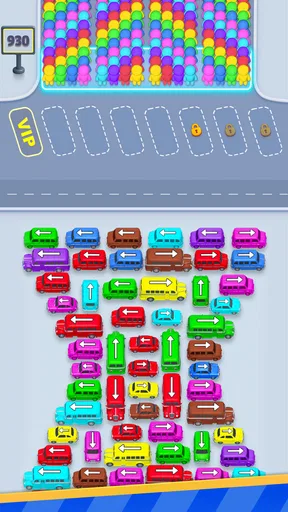
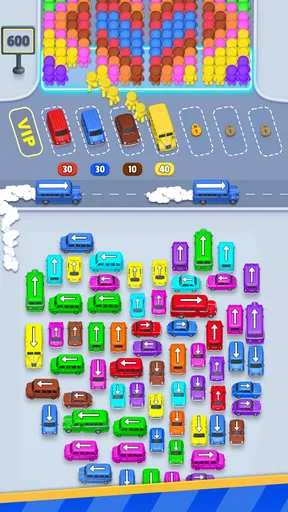
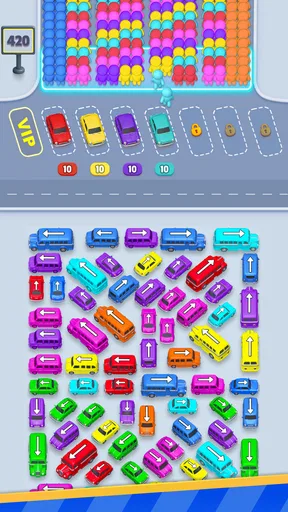
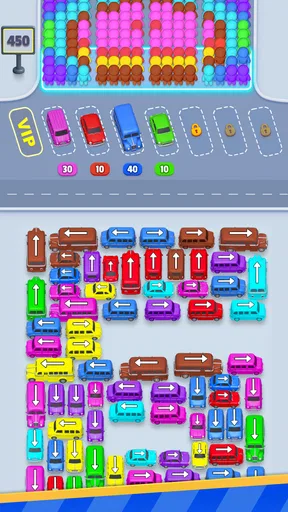
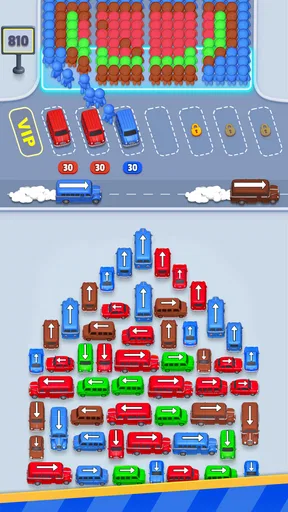
Our Review of Bus Go:Traffic Puzzle
 Analysis by Appyee
I found Bus Go:Traffic Puzzle most enjoyable when I treated it as a short concentration exercise rather than a game I needed to master in one sitting. Its central idea is easy to understand: buses, passengers, and blocked routes create a traffic problem, and I have to tap or arrange the available movement in the right order. That simplicity is exactly why it works. I can open it for a few minutes, study a crowded situation, make a decision, and feel that I have solved something without committing to a long session.
At the same time, the game is not a complete replacement for a deeper strategy title. Its appeal depends on how much I enjoy compact visual puzzles, quick restarts, and gradually increasing pressure. If I want a story, a large map, detailed customization, or a complex planning system, this is not the right destination. If I want a free casual game that asks me to think before tapping, it makes a convincing case.
Why the simple traffic idea works so well
The strongest part of the experience is the clarity of the basic problem. A traffic jam looks chaotic at first, but the solution usually begins with one useful observation: which bus can move safely, which vehicle is blocking another, or which action will open the most space. I like that the game turns an ordinary transport scene into a small logic test. The subject is familiar, yet the decisions are abstract enough to feel like a puzzle rather than a driving simulator.
That distinction matters. I am not steering through a city, following road signs, or managing fuel. I am looking at a compact situation and deciding what should happen next. The result feels closer to a visual sorting challenge than to a conventional racing or driving game. The casual category suits it because the rules are approachable, but the better stages still reward patience and forward planning.
In everyday use, I can imagine playing it while waiting for an appointment or during a short break when I do not want to start something demanding. A typical session begins with a quick scan of the buses and the available openings. I then try the most obvious move, discover that it creates a new obstruction, and restart with a different order. That loop is satisfying because the failure usually teaches me something about the layout instead of feeling completely random.
The tap-based interaction also keeps the focus on the puzzle. I do not need to learn a complicated control scheme before making progress. The important skill is reading the arrangement and resisting the urge to act too quickly. The best habit is to inspect the whole traffic pattern before making the first tap. That small pause often prevents a chain of careless moves and makes the game feel more thoughtful than its bright, casual presentation might suggest.
Small decisions create the real challenge
What I appreciate most is the difference between a move that is possible and a move that is useful. A bus may appear ready to leave, but moving it can close the only route another vehicle needs. That creates a simple but meaningful trade-off: immediate progress versus preserving options. The game does not need a complicated rulebook to produce this kind of tension. The layout itself supplies the question.
I found it helpful to divide each puzzle mentally into three stages. First, I identify the vehicles that have a clear path. Next, I look for the bus whose movement will unlock the largest area. Finally, I consider the order of the remaining taps rather than treating each vehicle as an isolated target. This approach is more reliable than tapping whatever looks closest to freedom, and it gives the game a little more depth than the store summary suggests.
Another useful technique is to look for bottlenecks. When several buses seem trapped around one narrow opening, that opening becomes the center of the puzzle. I focus on what controls it instead of trying to solve every vehicle at once. This is a practical way to reduce visual clutter, particularly on stages where the first impression is more confusing than the actual solution.
I also learned not to interpret a failed attempt as wasted time. In a traffic puzzle, the first attempt can function as reconnaissance. I can discover which bus blocks a route, which direction creates trouble, and whether a seemingly harmless tap causes the whole arrangement to lock up. Restarting with that knowledge feels different from repeating the same mistake, and that is where the game earns its casual-puzzle identity.
Where the presentation helps and where it gets in the way
Bus Go:Traffic Puzzle communicates its premise quickly. The vehicles and traffic arrangement make the objective understandable without a long explanation. That is valuable on a mobile screen, where I want to begin playing rather than read several pages of instructions. The visual setup also makes the game easy to show to someone else: a friend can look at the screen and understand that the challenge is to clear the congestion.
However, visual simplicity can become a weakness when several objects compete for attention. During a more crowded puzzle, I sometimes need an extra moment to distinguish the important route from background decoration or to remember which movement I was planning. This is not a fatal problem, but it means the game rewards a calm pace. People who prefer immediate, high-speed action may find the deliberate inspection less exciting than the title’s traffic theme suggests.
The audio-visual style is also best understood as support rather than the main attraction. I play this kind of game for the arrangement of the pieces and the satisfaction of clearing a jam. Anyone choosing it for elaborate vehicle physics or a realistic city-driving atmosphere may feel that the concept promises more simulation than the actual experience delivers. Its strength is the puzzle abstraction, not realism.
The meaningful limitation: repetition can change the mood
My main reservation is that the core interaction can become repetitive if I play for too long. Tapping buses and solving blocked arrangements is pleasant in short bursts, but the novelty depends heavily on the layouts continuing to make me reconsider my first plan. After an extended session, I may start to feel that I am performing variations on one central action rather than exploring a broad game system.
This is why I would not recommend treating it as an all-evening game by default. Its design makes more sense in several short visits. A few puzzles during a break can feel refreshing; a long uninterrupted run may expose the narrowness of the formula. Players who need a strong narrative, character progression, competitive rankings, or a wide collection of unrelated activities should look toward a larger puzzle game instead.
There is also a psychological trade-off in the free model. The game itself costs nothing to start, but optional in-app purchases range from $1.99 to $99.99 per item. That wide range makes it important for me to decide in advance whether I am comfortable with optional spending. I prefer to approach the game as a free casual diversion and avoid treating every difficult stage as a reason to buy assistance or extra convenience.
For parents, the Everyone age rating makes the game broadly approachable, but I would still explain the purchase side before handing a device to a child. The puzzle content is easy to understand, while the presence of optional purchases is a separate practical consideration. Keeping that distinction clear helps the game remain a low-pressure activity rather than an unexpected source of spending.
Who will get the most from it
I think this is a strong fit for people who enjoy casual traffic puzzles, visual problem-solving, and games that can be paused almost immediately. It suits players who like testing an order of actions, learning from a failed attempt, and solving a compact challenge without needing a large tutorial. It is also a reasonable choice for families looking for an accessible puzzle concept that does not depend on combat or complicated controls.
It works particularly well for someone who enjoys “one more attempt” games. The loop is easy to understand, but a poor first decision can make the whole arrangement collapse. That creates a natural reason to try again, especially when I can see exactly where my plan went wrong. The satisfaction is not just in clearing the buses; it is in recognizing the mistake and correcting the sequence.
I would be more cautious about recommending it to players who dislike restarting. Some traffic layouts may require experimentation, and the game’s pleasure comes partly from accepting that the first plan will not always work. If a player wants every action to feel permanently meaningful or prefers puzzles with a single long-form solution, a slower traditional logic game may be a better match.
It is also not ideal for anyone seeking a driving game. The buses are the theme and the puzzle pieces, not vehicles I freely control through a realistic road network. For that kind of experience, a simulation or racing alternative would offer more depth. Bus Go:Traffic Puzzle is better for someone who wants to think about movement than someone who wants to experience driving.
Practical details before installing
The game is free to install, and the current version is 12.0. It requires Android 6.0 or later, so it remains accessible on many older Android devices that are not running the newest software. That makes it a practical option for a spare phone or tablet, although the actual comfort of play will still depend on screen size and how clearly the traffic arrangement is displayed.
It comes from PopStoneGameTechnologyLimited-Shooting, and its popularity is visible in its average rating of 4.9 from around fifteen thousand ratings, alongside over 500K installs. Those figures suggest that the simple concept has reached a substantial casual audience, though I would not use popularity alone as proof that every player will enjoy the repetition trade-off.
The game is listed for release on May 12, 2026, and its Everyone rating supports the accessible tone. I would still judge it by the type of attention it asks for rather than by its age label. Younger players may understand the tapping quickly, while older players can appreciate the sequencing challenge. The real question is whether the player enjoys observing a problem before acting.
One detail I would keep in mind is screen ergonomics. On a phone, the compact layout makes the game convenient, but a smaller display can make a crowded traffic scene harder to read at a glance. A tablet may be more comfortable for players who want to inspect every route carefully. This is not a reason to avoid the game on a phone; it simply reinforces that the experience is about visual analysis, not reflex speed.
How it compares with other casual puzzle choices
Compared with match-three games, this title asks for planning instead of pattern recognition. I cannot rely on scanning for a familiar group of symbols and making a quick combination. The useful question is usually about order and consequences: if I move this bus now, what becomes possible afterward? That makes it a better choice for someone who wants a small logic exercise and a less suitable one for someone who prefers constant visual rewards.
Compared with hidden-object games, the challenge is more active. I am not simply locating a target; I am deciding how the discovered pieces should move. Compared with physics puzzles, the experience is more controlled and less dependent on unpredictable reactions. Those differences give it a clear place among casual games, even though the underlying interaction remains intentionally narrow.
Traditional grid-based puzzle games may offer deeper systems and more varied long-term strategy. Bus Go:Traffic Puzzle answers that complexity with immediacy. I can understand the situation quickly and begin experimenting without learning a large set of mechanics. For a commute or a short break, that accessibility is a real advantage. For a player planning a long campaign with extensive development, the simpler format may feel limited.
The best comparison is therefore not “which game is objectively better?” but “what kind of attention do I want right now?” When I want a quick visual problem with a clear goal, this game is convenient. When I want narrative investment, strategic variety, or a sense of building something over time, I would choose another category.
My final recommendation
Bus Go:Traffic Puzzle succeeds because it understands the value of a focused idea. It takes traffic congestion, turns it into an order-of-movement problem, and makes each tap feel like a small commitment. I enjoy the moments when a messy arrangement suddenly becomes readable and a carefully chosen first move opens the rest of the solution.
Its limitations are equally clear. The formula can feel repetitive during long sessions, the visual density may demand patience, and optional purchases mean I would keep spending boundaries in mind. None of those points ruins the experience, but they do define the audience. This is a casual puzzle for short, thoughtful sessions, not a full driving simulation or a broad strategy adventure.
I would recommend it to a friend who likes accessible brain teasers, restart-friendly challenges, and games that fit naturally into spare minutes. I would suggest skipping it if the goal is realistic bus operation, constant action, or a large progression system. For the right player, the simplicity is not a weakness; it is the reason the game is easy to pick up and surprisingly satisfying to solve.
My verdict is positive with a clear condition: play it for the focused puzzle moments, and it is a worthwhile free casual download. Keep sessions reasonably short, study the traffic before tapping, and use failed attempts to learn the layout. With that mindset, the game offers a clean little mental workout rather than pretending to be something larger than it is.
Privacy and Permissions
See what permissions an app requests and how it handles your data.
- Device & app history
- retrieve running apps
- Location
- approximate location (network-based), precise location (GPS and network-based)
- Phone
- read phone status and identity
- Photos/Media/Files
- read the contents of your USB storage, modify or delete the contents of your USB storage
- Storage
- read the contents of your USB storage, modify or delete the contents of your USB storage
- Wi-Fi connection information
- view Wi-Fi connections
- Device ID & call information
- read phone status and identity
- Other
- view network connections, pair with Bluetooth devices, connect and disconnect from Wi-Fi, full network access, control vibration, prevent device from sleeping, install shortcuts, Google Play license check
Verdict
Strengths of Bus Go:Traffic Puzzle
- Simple rules make it easy to start playing immediately.
- Short levels are convenient for quick gaming sessions.
- Colorful visuals make the board easy to read.
- Gradually increasing difficulty keeps the puzzles engaging.
- Works well for players who enjoy casual logic challenges.
Limitations of Bus Go:Traffic Puzzle
- Some levels may feel repetitive after extended play.
- Later puzzles can depend heavily on trial and error.
- Frequent ads may interrupt the gameplay experience.
- Limited variety can reduce long-term replay value.
- Mistakes may require restarting a puzzle from the beginning.
Other Releases by PopStoneGameTechnologyLimited-Shooting
View All
Shooting Ball
Sports4.7

Shooting Archery
Sports4.7
Similar Picks in This Category
View All
My Talking Angela
Outfit7 Limited4.2

My Talking Tom
Outfit7 Limited4.3

Pou
Zakeh4.2

My Talking Tom 2: Pet Game
Outfit7 Limited4.3

Candy Crush Saga
King4.6

Bridge Race
Supersonic Studios LTD4.1
Frequently Asked Questions
What is Bus Go: Traffic Puzzle, and how do you play it?
Bus Go: Traffic Puzzle is a casual puzzle game focused on organizing buses, passengers, and traffic routes. The main objective is usually to solve each level by matching passengers with the correct buses while avoiding blocked paths, overcrowding, or inefficient moves. Gameplay is easy to understand, but later stages require careful planning, timing, and attention to the order in which vehicles are moved.
Is Bus Go: Traffic Puzzle free to download and play?
The game can generally be downloaded and started without an upfront purchase, making it accessible to casual players. However, free versions may include advertising, optional in-app purchases, or extra items that can speed up progress or provide helpful tools. Before downloading, check the store listing for the current pricing, available purchases, and whether certain features require payment.
Does Bus Go: Traffic Puzzle require an internet connection?
Bus Go: Traffic Puzzle may allow some basic levels to be played offline, which is convenient when traveling or when mobile data is unavailable. Nevertheless, an internet connection can be necessary for advertisements, rewarded bonuses, cloud-related features, updates, or special events. Availability may vary by device and version, so it is best to test offline access after installation rather than assuming every feature works without connectivity.
Is Bus Go: Traffic Puzzle suitable for children?
The game is designed around simple controls and colorful puzzle mechanics, so it can be approachable for children and family audiences. Even so, parents should review the age rating, advertising content, and in-app purchase settings before allowing unsupervised play. Some levels may also become challenging, and repeated attempts or optional hints could encourage purchases if spending restrictions are not enabled on the device.
Are there many levels, and does the game become difficult?
Bus Go: Traffic Puzzle is intended to provide progression through multiple traffic and passenger-based puzzles, with the complexity increasing as new obstacles or movement rules appear. Early levels typically work as a tutorial, while later challenges demand more precise planning and sometimes several attempts. The overall experience is best for players who enjoy short sessions, logical problem-solving, and gradually harder stages rather than fast action.
Play our best games!


